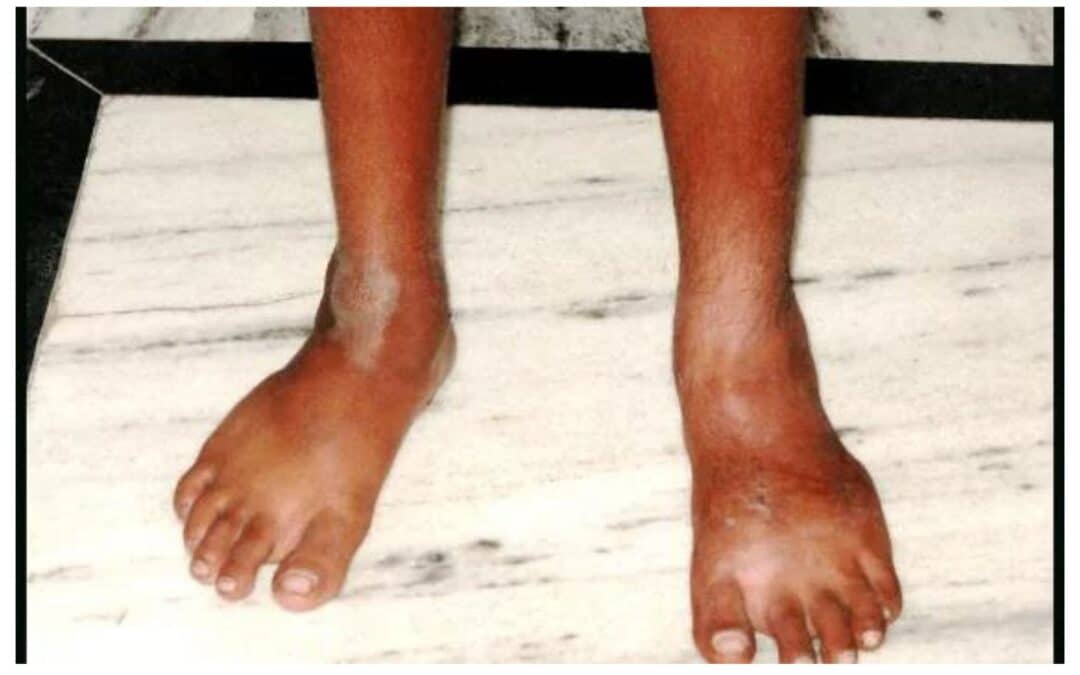

Both adults and children often have flat feet, particularly in the early stages of development. To put it simply, flat feet result from improper foot arch development or collapse during weight-bearing activities. Many kids naturally outgrow this ailment, but as they get older, some still struggle with discomfort, exhaustion, or posture issues.
Exercises for flat feet are essential in these situations because they improve arch support, strengthen foot muscles, and encourage appropriate movement patterns. Long-term issues can be avoided for developing children through prompt intervention, including posture adjustments, guided activities, and professional medical evaluation.
Parents often worry that their child’s gait, athletic ability, or spinal alignment may be affected by flat feet. The good news is that specific workouts for flat feet can support standard foot mechanics, improve muscle coordination, and enhance flexibility.
Children with flat feet or any type of foot deformity can benefit from individualized exercise regimens tailored to their age, activity level, and condition severity, under the supervision of a pediatric orthopedic doctor.
This detailed blog explains why workouts matter, the best routines for children, which moves to avoid, and how to preserve long-term foot health.
Why Exercises are Important for Flat Feet?
Although signs of flat feet are not necessarily painful, they can affect a child’s confidence and mobility. Tired legs, foot soreness after walking, an uneven gait, and frequent stumbling are common symptoms. Flat feet exercises improve ankle stability, promote healthy arch growth, and strengthen the intrinsic muscles of the foot.
Exercises for flat feet have several advantages, such as:
- Building up the muscles of the ankles and feet
- Enhancing natural arch support
- Improving coordination and balance
- Decreasing pain and foot fatigue
- Promoting proper alignment and posture
- Preventing foot deformity-related issues in the future
Frequent flat-foot exercises also improve body awareness, which is crucial for kids who play sports. Retraining the foot to maintain a better arch while standing and movement can be accomplished over time with regular exercise.
Additional long-term benefits:
- Decreased chance of lower back, hip, and knee strain
- Improved shock absorption when running and walking
- Increased stamina for everyday tasks
- Increased strength and flexibility of the feet
- Support for skeletal alignment and healthy growth
It’s crucial to keep in mind that exercise may not always be sufficient. A pediatric orthopedic doctor should assess children with ongoing discomfort or difficulty walking to rule out structural issues and provide tailored advice.
Best Exercises for Children with Flat Feet
Consistency is more important than intensity when managing or repairing children’s flat feet. Exercises should be easy to include in regular activities, enjoyable, and straightforward. These are some of the best flat-foot exercises recommended by physiotherapists and orthopedists.
Toe Curls (Towel Grabs)
These easy flat-foot exercises activate the small muscles in the feet that maintain the arch.
How to do it?
- Put a little towel on the ground.
- Request that the child use their toes to grasp the towel and pull it toward them.
- Do this ten to fifteen times.
Benefits:
- Increases the strength of the arch muscles
- Increases the flexibility of the toes
- Increases the strength of the foot grip
This can be turned into a game for younger kids and is one of the simplest flat-foot exercises for beginners.
Heel Raises
Heel lifts promote correct foot posture and develop the calf muscles.
How to do it?
- Place your feet hip-width apart and stand upright.
- Slowly raise your heels off the ground and stand on your toes.
- Hold for 3–5 seconds and lower down
Benefits:
- Increases the strength of the ankle and calf muscles
- Enhances stability and balance
- Encourages the creation of arches
Over time, walking posture can be improved by incorporating this into regular flat-foot workouts.
Arch Lifts (Short Foot Exercise)
This specific flat-foot exercise directly engages the arch muscles.
How to do it?
- Go barefoot
- Aim to raise the foot’s arch without curling the toes.
- After a few seconds of holding, let go.
Benefits:
- Increases awareness of the arch
- Increases the strength of the intrinsic foot muscles
- Promotes good foot alignment
Marble Pick-Up
This entertaining regimen of flat foot exercises improves foot strength and toe control.
How to do it?
- Put marbles on the ground.
- Request that the child use their toes to pick them up and place them in a dish.
Benefits:
- Improves toe dexterity
- Enhances the coordination of muscles
- Promotes the stability of the arch
Ankle Alphabet
This workout enhances ankle mobility and muscle control.
How to do it?
- Sit with your legs outstretched.
- Trace the alphabet’s letters in the air by moving your foot.
Benefits:
- Increases the flexibility of the ankle
- Increases the range of motion in joints
- Supports the general function of the foot
Balance on One Foot
Exercises for balancing enhance foot coordination and strength.
How to do it?
- For ten to twenty seconds, stand on one foot.
- Change sides
- Continue advanced balancing by closing your eyes.
This is one of the most effective flat-foot exercises for improving proprioception and stability.
Calf and Foot Stretching
Tight calf muscles might worsen the symptoms of flat feet.
How to do it?
- Calves should be stretched against a wall.
- Use a cloth to gently stretch the sole.
Benefits:
- Lessens rigidity
- Increases adaptability
- Improves the comfort of walking
How often should Children do Flat Feet Exercises?
For optimal outcomes:
- Perform flat feet exercises 4–5 times a week
- Start each workout at 10 to 15 minutes.
- Increase repetitions and duration gradually.
- Under supervision, make sure the procedure is correct.
Consistency helps promote healthy movement patterns and strengthens the foot structure over time.
Flat Feet Exercises to Avoid
Exercise is good for kids with flat feet, but not all exercises are appropriate for them. Certain activities might worsen foot and ankle pain or cause strain.
Exercises to stay away from include:
- High-impact leaping on hard surfaces
- Running long distances without using supportive shoes
- Ignoring stretching and warm-up exercises
- Excessive, unsupervised tip-toe walking
- Intense resistance training for the feet
Excessive or improper exercise can worsen symptoms, particularly in kids with underlying joint instability or foot deformities. Exercises should always be done carefully and under close supervision.
Visit a pediatric orthopedic doctor to rule out related conditions such as ligament laxity, alignment problems, or structural abnormalities if the discomfort doesn’t go away with exercise.
Trishla Ortho – Creating Solid Roots for Healthy Feet
Children’s flat feet are common, controllable, and frequently temporary. Children can build stronger arches, greater balance, and better posture with early attention, appropriate instruction, and regular flat-foot activities.
During growth years, the proper exercise regimen not only promotes foot health but also improves general mobility and self-assurance. Every child should have solid foundations for an active future at Trishla Ortho.
Our skilled pediatric orthopedic care focuses on identifying the underlying causes of foot issues, developing individualized exercise regimens, and providing long-term support for disorders associated with flat feet and other foot deformities. Let Trishla Ortho help your child embrace a better, more self-assured future.