Osteogenesis Imperfecta in Children
Your child is learning to walk, and she trips over. Fracture happened many time after that. Doctor made the diagnosis of weak and fragile bone. Then you always think, that why it happen in so small children. It happens only in one in one lac families. It is not bad luck or overreacting. That is brittle bone disease or osteogenesis imperfecta in children. Let the mystery be over- no pun.
What is Osteogenesis Imperfecta in children?
Let’s listen to the insights from the leading orthopedic specialist in Allahabad.
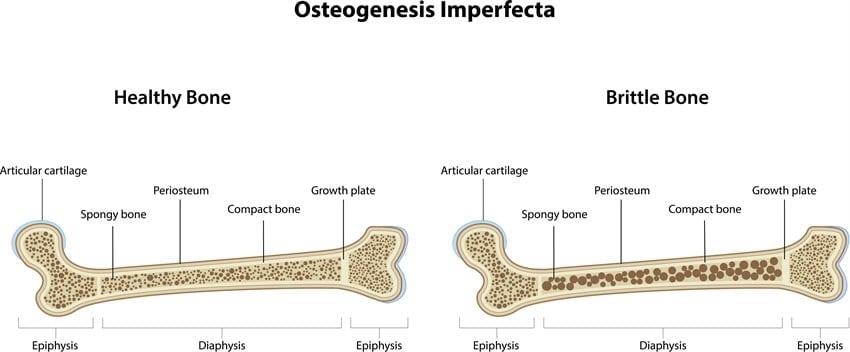
- Osteogenesis imperfecta (OI) is a rare genetic disorder in which bone easily fractured with or without any trauma. So, it is also known as a brittle bone disease
- It is present since birth.
- Its severity varies.
- Symptom may range from mild to severe and some time it may be lethal.
Causes of Osteogenesis Imperfecta?
- Genetic insult is the cause of this disease. In which one of the genes is the problematic that makes Type 1 Collagen, a protein in body connective tissues. These children will not have sufficient good quality collagen, this will lead to fragile bones that break very easily.
- Type 1 collagen is the most abundant in bone. It forms 90% of the organic mass of bone and tendon. It is also major part of the skin, ligament, cornea and other tissues.
- Severity and variety of OI is depended upon type of gene involvement.
Symptoms of Osteogenesis Imperfecta in children?
Each child will have different set of symptoms related with variety of osteogenesis imperfecta.
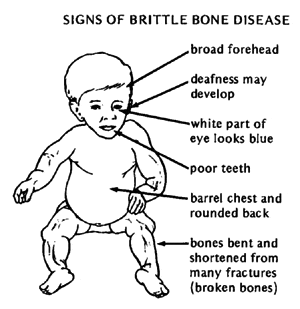
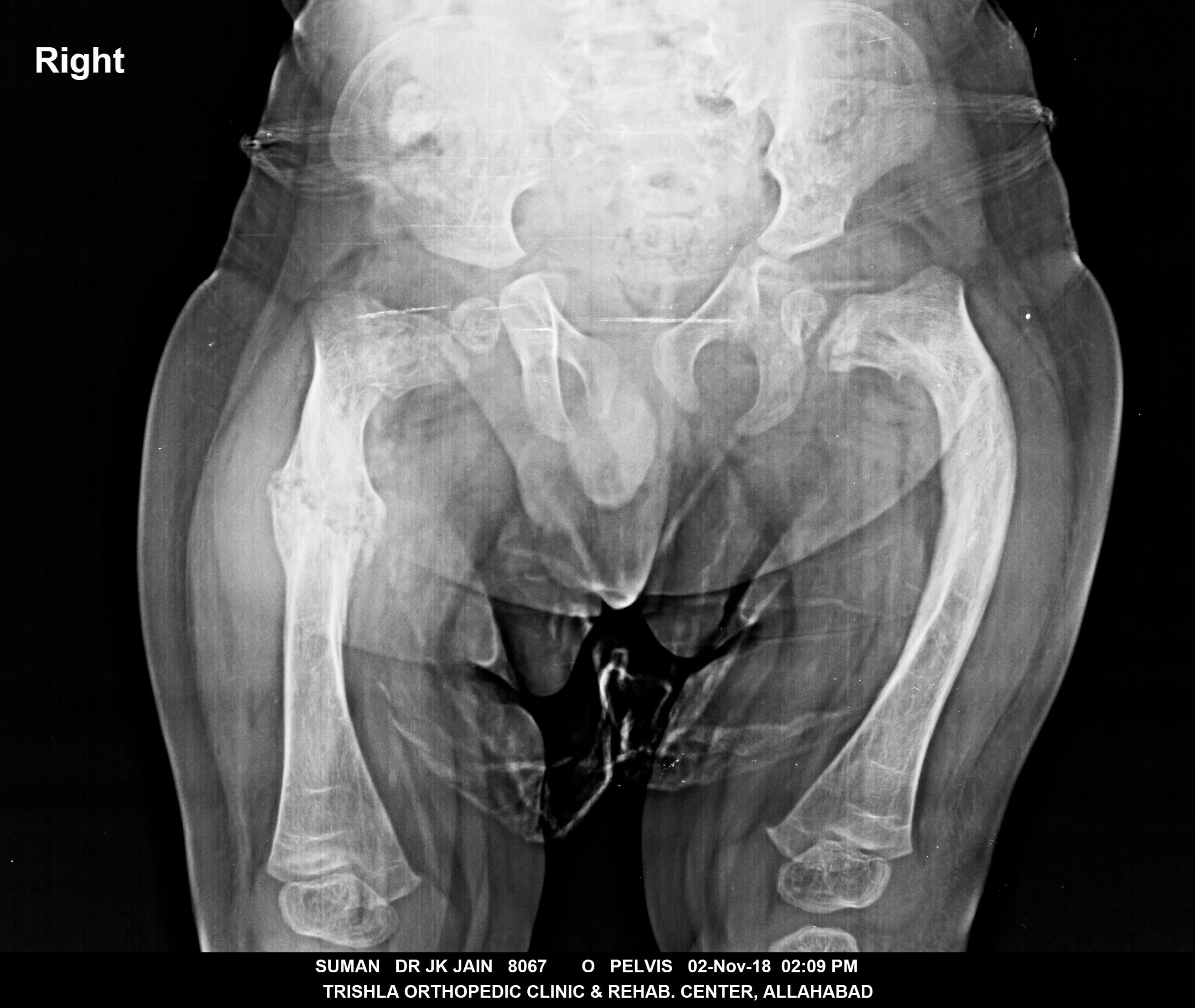
- Fragile bone that can fracture easily with trivial trauma
- Deformity of bone especially in leg and arm
- Blue sclera
- Curved spine
- Short stature
- Bruise skin
- Hearing loss
- Soft & Discoloration of teeth
- Muscle weakness
Who is at Risk?
OI is a disorder that’s inherited within families. BUT your kid can be OI-prone due to a gene mutation that “just happened”-even if the rest of your family don’t have any issue.
YOU’RE AT increased risk if;
- Either parent has OI (dominant inheritance)
- Both parents have recessive gene mutations (recessive inheritance)
- A family history of brittle bones or repeated fractures
- Genetic counseling is strongly advised in recurrent atraumatic fractures or familial cases with OI diagnosis.
Osteogenesis Imperfecta in children
Depending on the type and severity of the disease, signs may be variable. Some of them are:
- Recurring fractures following minor accidents or falls
- Purple, blue, or gray discoloration of the whites of the eyes (sclera)
- Loosening of muscles and joints
- Bony deformities such as bow legs or scoliosis
- Short stature
- Deafness (onset in adolescence or adulthood)
- Brittle teeth ( Dentinogenetic imperfecta)
In the mildest forms, the children will be normally healthy until first fracture and strong suspicion arises in the more severe forms, when deformity or fracture occurs at birth.
Types of Osteogenesis Imperfecta
Eight types of OI have been described, which are classified based on their severity, cause, and presentation:
Type I – Mild
- Type 1 OI mildest form of Osteogenesis Imperfecta and the most common type.
- Usually or almost normal height
- Fractured bones are largely prepubertal
- Mild bone deformity, blue eyes
Type II – Perinatal Lethal
- Worst, typically lethal in early infancy after birth
- Multiple fractures at birth
- Extreme bone deformities, underdeveloped lungs
Type III – Severe
- Severe deformities, very short stature
- Recurring fractures from infancy
- Possible curvature of the spine, barrel chest
Type IV – Moderate
- Uncomplicated fracture of a bone, sometimes intrauterine
- Moderate or mild bone deformity
- Slotted sclera, shortness
Type V – Moderate, Well-developed Features
- Same as Type IV, but in addition
- Dense lines in growth plates
- Large calluses at the fracture site
- Acute dysfunction of arm use by immobilization of the forearm bone
Type VI – Unusual
- Bone biopsy is characteristic.
- Fish-scaled bones
- Same type of expression as Type IV
Type VII – Recessive
- Humeral and femoral shortness
- Same expression as Type II or Type III
- White-eyed sclera
Type VIII – Recessive
- Bone weakness to excess
- Decreased bone density
- Poor growth
Dominant vs. Recessive Inheritance Pattern
Dominant Inheritance
OI is generally linked with a prevailing pattern of inheritance, Type I to V. To put it simply, one allele of each of the defective genes inherited from either of the parents will result in the disease. In the case of an OI-affected parent, there is a chance that it will be passed on to the child with 50% certainty.
Recessive Variant
Types VI to VIII are rare and, by recessive inheritance, both parents will have the mutant gene (even though they may never become evident with any signs whatsoever). Both of the genes will have to be received from both of the parents for the child to get OI.
What Are the Effects of OI?
Aside from physical disability, osteogenesis imperfecta in children can also have emotional and psychological effects:
- Social isolation because of mobility restriction or hospitalization
- Fear of engaging in activities like sporting events or school attendance
- Delayed development with increased time to recover
- Stress and expense of chronic medical care
It’s not just a question of doing fractures, anyway, though doing fractures is part of the larger deal. It’s a question of whether or not the general health of the child is being addressed to.
How is Osteogenesis Imperfecta diagnosed in children?
- Doctor will take detail history of child medical history. They will examine the child.
- Detail examination of teeth, skin, deformity, eye along with h/o fracture will give clue about the diagnosis.
- Detail history of fracture of bone since infancy without much trauma & dis-colouration of sclera in eye can indicate toward the possibility of osteogenesis imperfecta.
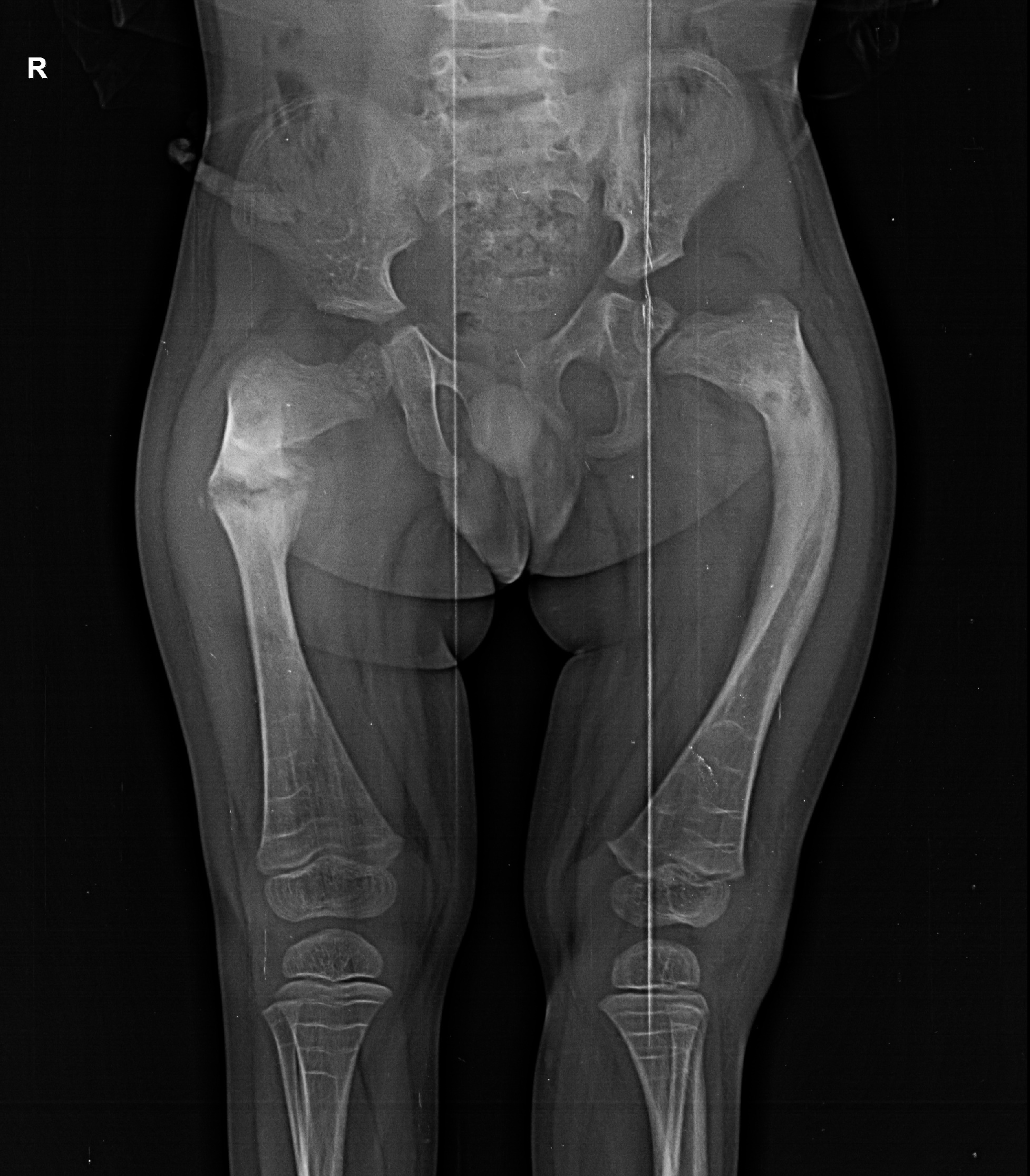
- X-ray is the most important investigation as for primary diagnosis is concerned.
- Genetic evaluation may be necessary to confirm the type of OI.
- DEXA Scan can be required to see the bone quality.
Treatment for Osteogenesis Imperfecta?
· There is no cure of osteogenesis imperfecta.
· Treatment is depended upon child symptom, age, general health and severity of symptom & type of OI.
· Treatment is aimed to prevention, treatment of fracture, & correction of deformity etc.
· Rehab measure including brace are being given to make child independent as much as possible.
Bisphosphonate (Medicine):
Bisphosphonate improve bone density so decrease the chances of fracture. It is being given by intravenous rout. It has to be used at regular interval for years under the guidance of experienced doctor. Before giving this injection calcium & vitamin D supplement is necessary.
Plaster cost:
Plaster cost is required to hold the fracture till healing. But we should be careful that plaster should be used in reduced position of fracture otherwise fracture will unite in deform position. Fracture union time is nearly normal in most of the cases.
Orthosis:
light weight orthosis made of polypropylene is required to support the limb during activities so fracture can be prevented.
Exercise:
These children can’t be given prolong bed ridden because with rest bone will be more weaken so light weight bearing exercises are advises to maintain bone quality.
Surgery:
Surgery is required to manage broken bone and to correct the deformity. Bone gets usually unite at their normal speed but with deformity. So, most of time deformed bone need correction by surgery and fixation by dual Rod system. A pediatric orthopedic surgeon in India manages this deformity and recurrent fracture. Growing metal rod is inserted in medullary canal after correction of deformity. It prevents the fracture.
Living with OI: Why Early, Specialized Care Matters
As a parent of a child with Osteogenesis Imperfecta (OI), you’re not just navigating everyday challenges, but also unique struggles related to school, accessibility, attitude, and developmental milestones. This highlights the importance of early diagnosis and specialized orthopedic care from qualified and trained professionals
Every kid is different. An individual program of treatment is required for every child.
Long term outlook for Osteogenesis Imperfecta in children?
- With advancement of age, incidence of fracture gets reduced. Type 2 OI don’t survive.
- Other variety child will be able to reach adult hood.
- They may need to wear braces and have intramedullary rod for long period.
- These adults should avoid taking medicine like steroid and should not use smoking and drinking.
- Avoiding brisk activities
- Good care and follow up under paediatric orthopaedic surgeon are mandatory for good quality of life.
Complications of osteogenesis imperfecta in a child?
Most common complication of osteogenesis imperfecta in children is the
- Repeated fracture,
- Deformity of bone,
- Hearing loss
- Joint problem
- Vision problem
- Respiratory infection
Trishla Ortho: Hope for Children with OI
If your child is born with osteogenesis imperfecta, the starting point could be the turning point in their world.
Trishla Ortho is a 20-year-old center, world-renowned brand of pediatric orthopedic treatments where specialists shine in curing children victimized by such conditions as OI. Trishla Ortho headed by Dr. Jitendra Kumar Jain, specializes in delivering customized treatment, surgery, and rehabilitation suitable for children. Our philosophy is centered on holistic healing, where we care for not just the physical body, but also the emotional and spiritual well-being of our young patients, nurturing their overall growth and development.
Conclusion
Osteogenesis imperfecta in children is uncommon, but its impact is felt. From infancy to day-to-day management, each step must be lovingly, professionally, and cautiously guided. Successful support mechanisms and medical treatment with OI children can bring forth healthy, productive lives of strength, not fear.
If your child have the symptoms of OI & requires another professional opinion, don’t wait. Contact Trishla Ortho and start building the path to a healthier, stronger tomorrow.
Frequently Asked Questions
Can you walk with osteogenesis imperfecta?
Few people with Type 1 OI are very mildly affected. Their height is average or above-average. Thus, they can walk but we need to take caution and with strict guidance of pediatric orthopedic surgeon and with proper limb support like wearing brace.
Can brittle bone disease be cured?
There is no complete treatment for brittle bone disease. But the treatment can reduce symptoms, stop the breakage of bones, and maximize movement.
Does osteogenesis imperfecta get worse with age?
Yes, it may get worse as your child gets older but in few variety it may better.

Reviewed and Submitted by Dr. Jitendra Kumar Jain
Last updated on November 27, 2020
Dr.Jitendra Jain, MD and DNB (Orthopedics), president at Trishla Foundation, an NGO for treatment of cerebral palsy, and a Consultant Pediatric Orthopedic Surgeon & Cerebral Palsy Specialist at Trishla Orthopedic Clinic & Rehab Center.
Dr. J. K. Jain is a member of the general council at Dr. SMN university of rehabilitation, Lucknow, a member of the advisory board chief commissioner for PWD, Govt. of India (New Delhi), a member of the state disability research committee (U.P.), and a member of the committee of RCI, New Delhi. He has been awarded many awards, including the Dr.Bhagawan das memorial award, the spirit of humanity award, and the state govt. award for his services towards PWD, etc. Times of India has posted his work many times and mentioned him as one of the best doctors in the field of Pediatric Orthopedics. He helped many children recovering from cerebral palsy, just like comedian jay Chanikara, who is now able to stand and walk without any support, Abena, a Ghana girl with cerebral palsy, and many more. He also organized the National Wheelchair cricket tournament and created World’s first cerebral palsy village foundation in Prayagraj. He successfully treated 10,000+ children with various kinds of orthopedic disability, conducted 160+ free assessment camps, and produced a documentary film on cerebral palsy.
Walk in Appointments Available Daily
You can make an appointment online for video tale-consultation by fixing up an appointment at this website or you can visit the clinic to make an appointment in person and show to doctor with the care of social distancing at the given time.
Contact us
Call Us
0532-3550523
+ 91 9415014994
+ 91 8577873545
+ 91 9455001645
Email Us
totrishlaortho@gmail.com
Our Location
Dr. Jitendra Kumar Jain
Trishla Orthopedic Clinic & Rehab center, 182C / 350A, Tagore Town, Prayagraj (Allahabad) U.P-211002, India